
Species guide
Tilapia
Oreochromis niloticus
Fast-growing, hardy and tolerant of high stocking densities — but that density puts real pressure on water quality, so pond conditioning matters as much as the feed.
- Optimal stocking
- 15,000–25,000per hectare
- Maximum stocking
- 40,000per hectare
- Optimal temperature
- 26–30degrees Celsius
- Typical harvest size
- 400–800 g
- Typical culture period
- 5–7 months
- Feeding zone
- Surface and column
Water to aim for
- Temperature
- 26–30 °C
- Dissolved oxygen
- 4 mg/L or more
- pH
- 6.5–8.5
Feeding by growth stage
General starting ranges, as a share of the fish's body weight each day. Adjust to appetite, water temperature and oxygen, and ask your advisor for your own pond.
Fry to fingerling
- Fish size
- Up to 50 g
- Feed per day
- 5–8% of body weight
- Meals per day
- 4
Feed
Juvenile
- Fish size
- 50–200 g
- Feed per day
- 3–4% of body weight
- Meals per day
- 3
Feed
Grow-out
- Fish size
- 200–500 g
- Feed per day
- 2.5–3% of body weight
- Meals per day
- 2
Feed
Finishing
- Fish size
- Above 500 g
- Feed per day
- About 2% of body weight
- Meals per day
- 2
Feed
Floating and sinking feed together
Tilapia take floating pellets readily, so a floating feed alone is normally enough and lets you see appetite at every meal. Add a sinking feed only if the pond also holds carp or other bottom feeders.
Good practice
- Stock all-male (monosex) seed for even growth and no unwanted breeding.
- Feed at the same times every day; the fish learn the routine and come up to feed.
- Healthy tilapia clear their feed within about 10 minutes. Food left after that means the ration is too high.
- Hold back feed when water is below 20 °C or above 35 °C.
- Exchange some water regularly in densely stocked ponds to keep the fish eating well.
Mistakes to avoid
- Mixed-sex stocking, which leads to breeding in the pond and stunted fish.
- Stocking densely without enough aeration.
- Relying on sinking feed for a species that feeds near the surface.
- Not managing off-flavour in the weeks before harvest.
- Bringing in seed without checking where it came from.
Recommended products
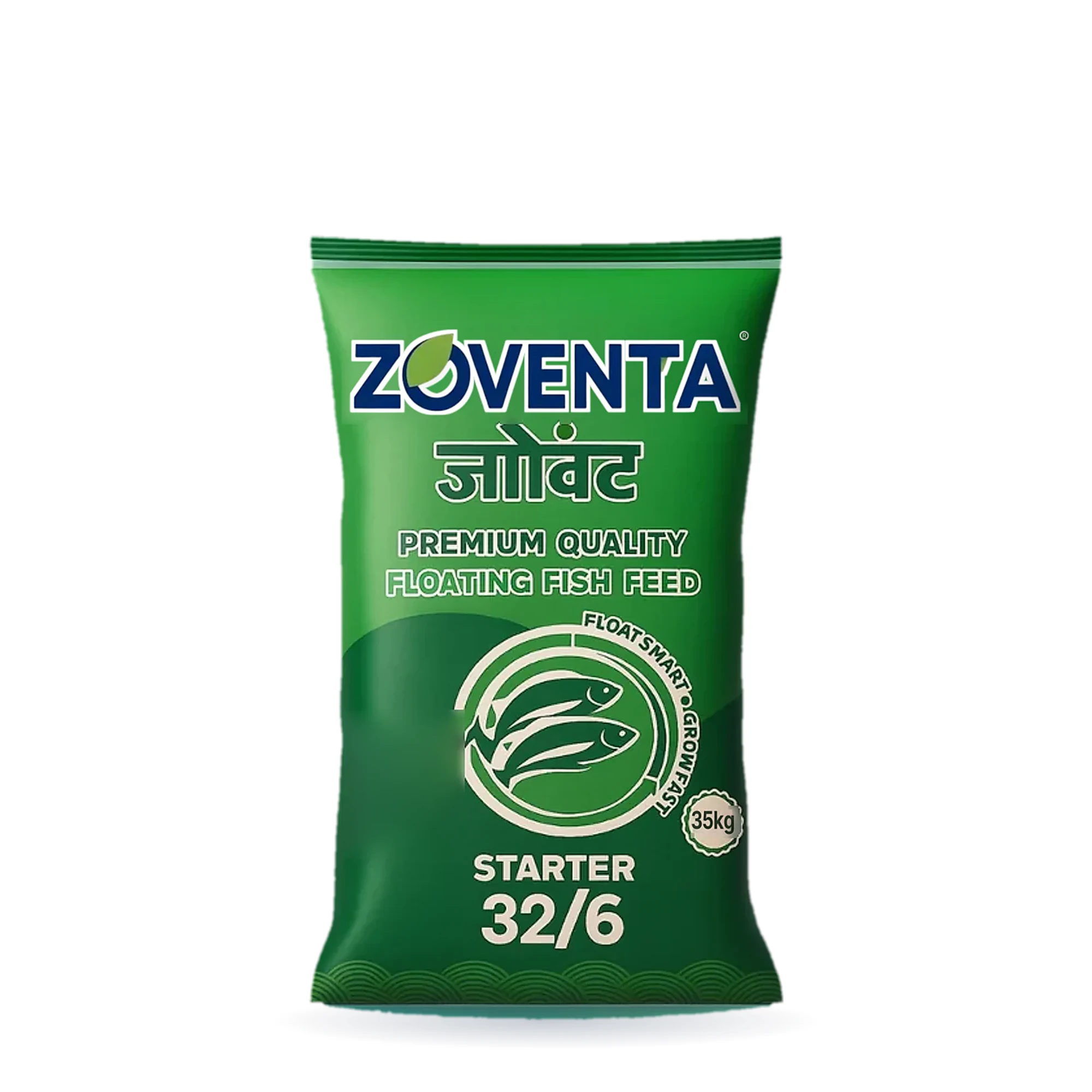
Starter Feed
Floating Fish Feed - Starter 32/6
High-protein, nutrient-rich floating feed formulated for the early growth stages of fish
- High Protein Content
- Vitamins and Minerals
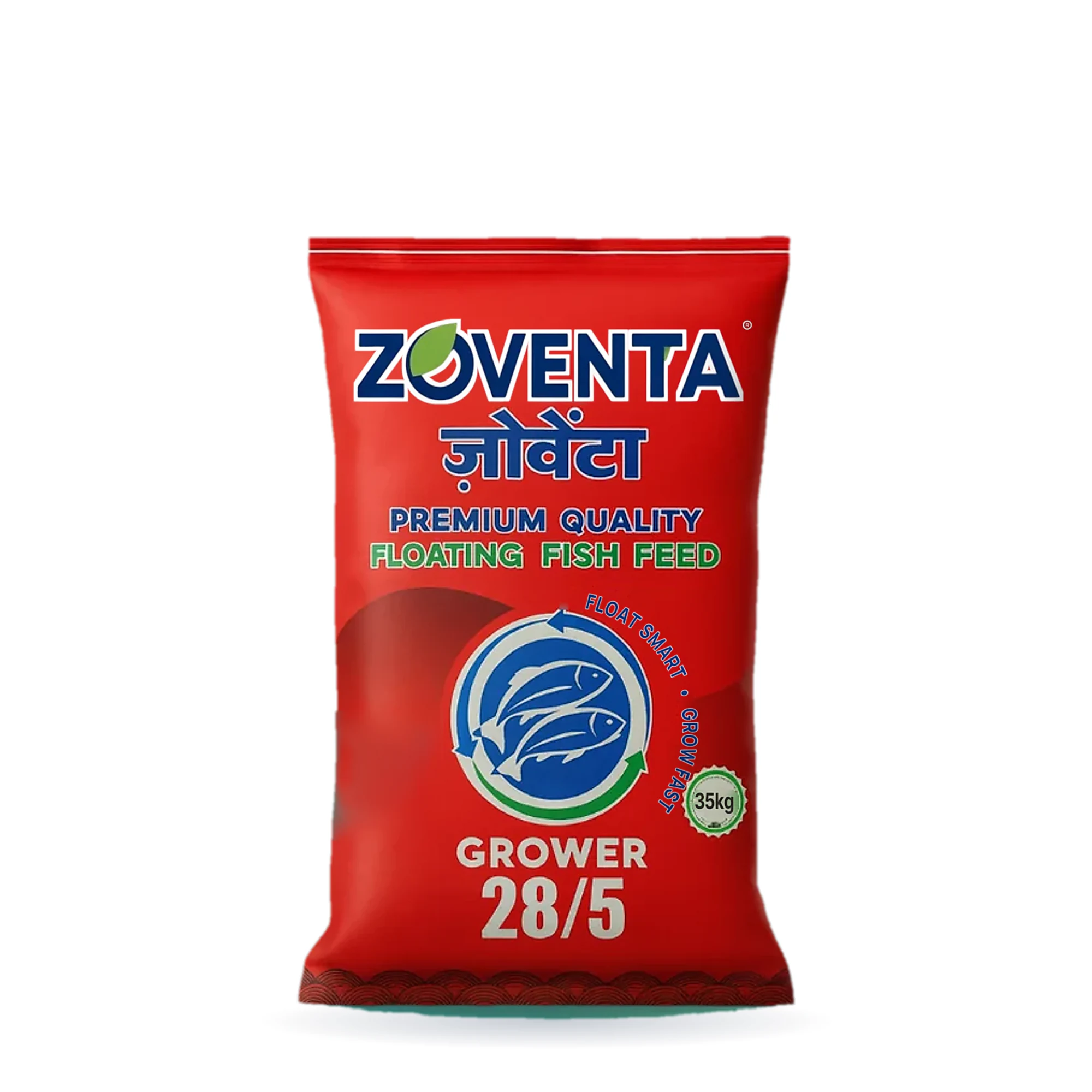
Grower Feed
Floating Fish Feed - Grower 28/5
A scientifically balanced floating feed designed for the intermediate growth phase
- Balanced Protein-Fat Ratio
- Vitamins and Minerals
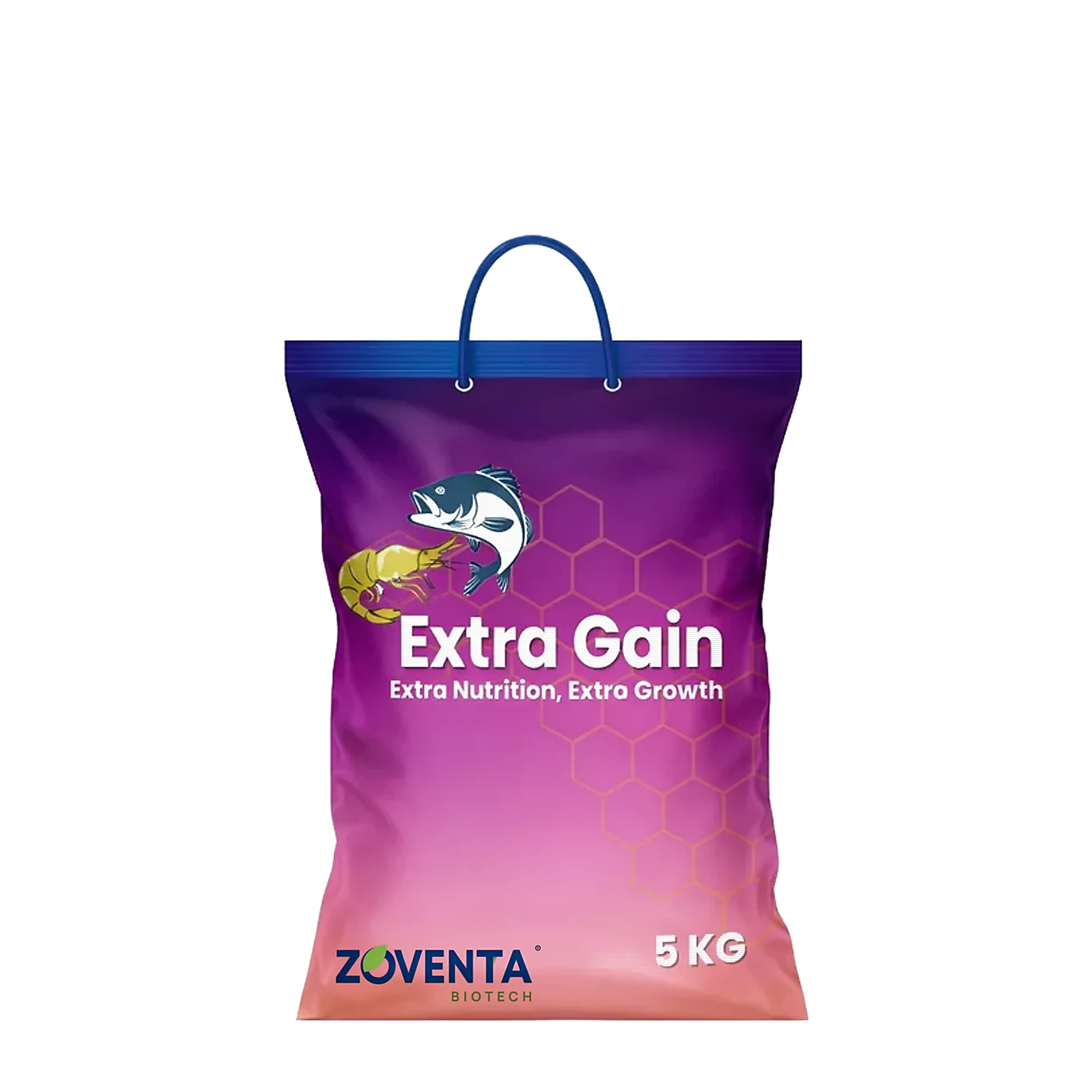
Extra Nutrition, Extra Growth
Extra Gain
A scientifically designed feed supplement that enhances feed efficiency
- Boosted FCR
- Accelerated Weight Gain
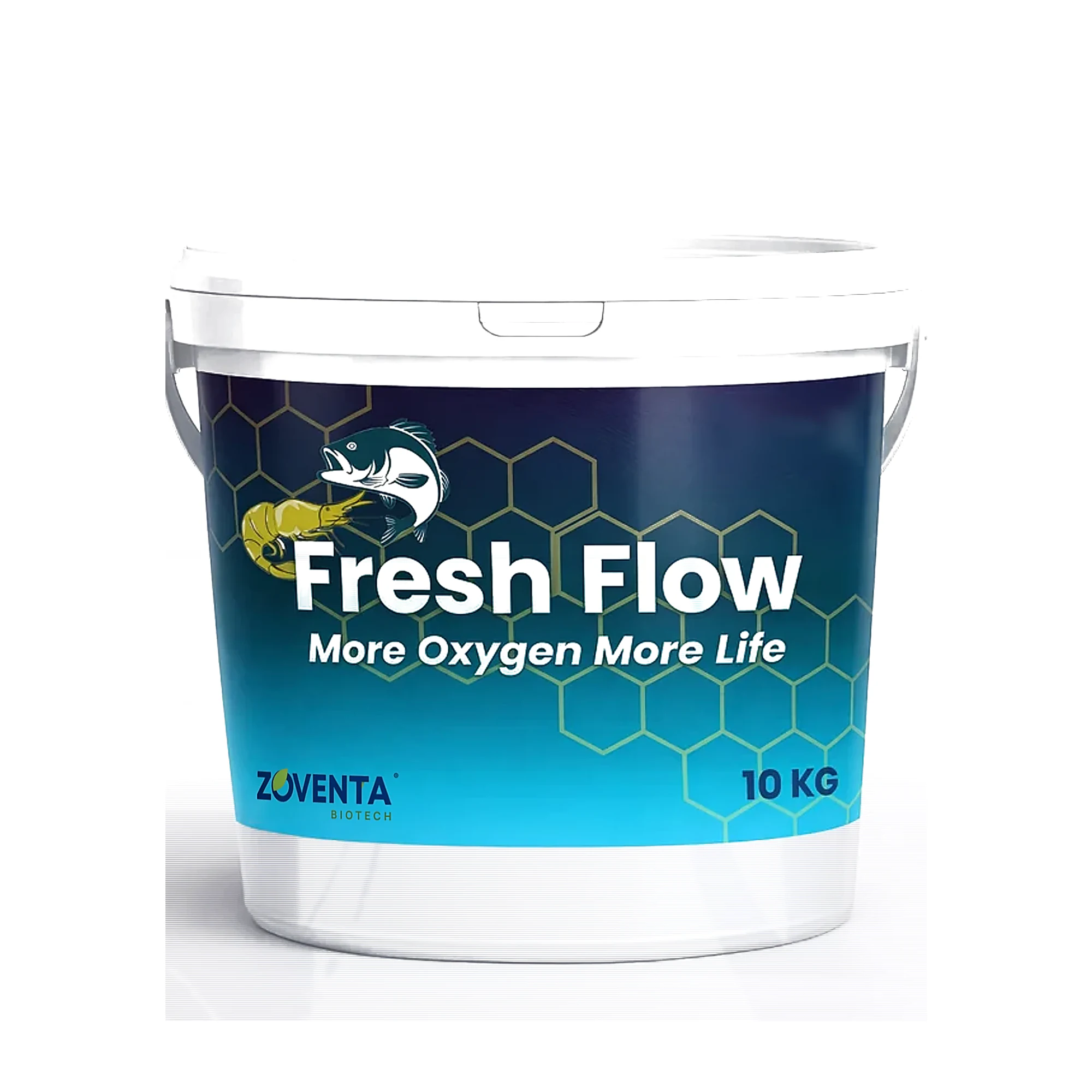
More Oxygen More Life
Fresh Flow
An advanced granular formulation that rapidly releases oxygen into pond water
- Fast Oxygen Release
- Emergency Aeration
Read more
- Guide · 7 minFloating vs Sinking Feed: Complete Guide for Indian Polyculture
- Guide · 6 minHow to Calculate Daily Fish Feed Requirement: A Practical Guide
- Guide · 8 minComplete Guide to Water Quality Management in Aquaculture
- Guide · 4 minCommon Feeding Mistakes in Traditional Aquaculture and How to Avoid Them
- Guide · 4 minKeeping Fish Healthy: Biosecurity, Pond Management and Early Warning Signs
- Guide · 3 minFeed Optimisation: Getting More Growth from Every Bag
- Guide · 3 minSeasonal Aquaculture: Best Practices for Each Season
- Guide · 3 minProbiotics in Aquaculture: What They Are and How to Use Them
- Guide · 3 minStocking Density: Finding the Right Balance for Your Pond
Work out feed for your tilapia pond
Enter your stock count and average weight to get a daily feeding rate adjusted for water temperature — or ask the advisor and it will do the calculation for you.