
Pond Health · 8 min read
Complete Guide to Water Quality Management in Aquaculture
Learn essential techniques for maintaining optimal water parameters to ensure healthy fish growth and maximize production efficiency.
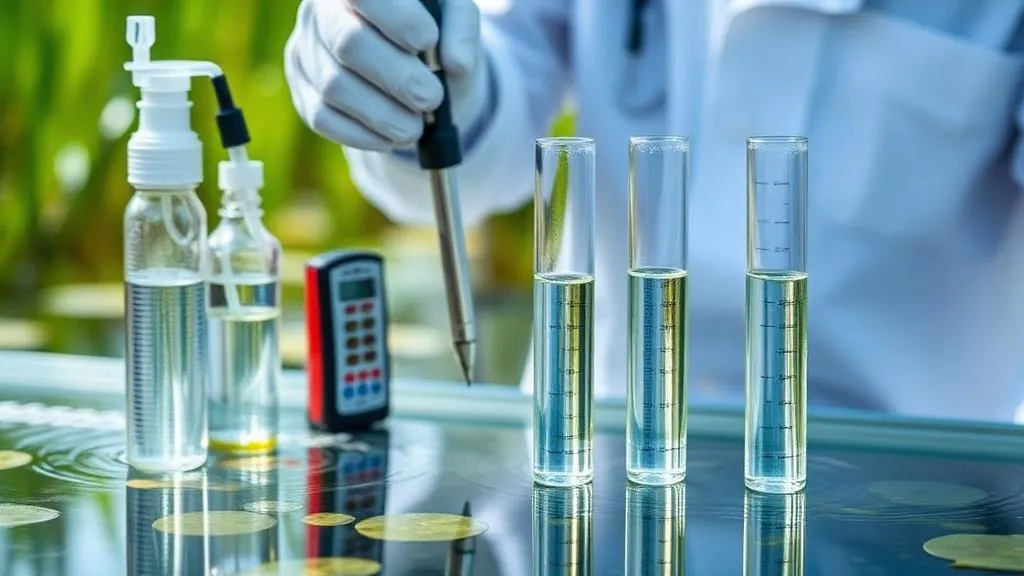
Water quality management is the cornerstone of successful aquaculture operations. The health of your aquatic stock, their growth rates, and ultimately your profitability are all directly tied to maintaining optimal water parameters.
Understanding Critical Water Parameters
Every successful fish farmer knows that water is more than just H₂O—it's a complex ecosystem that requires constant monitoring and management. The key parameters that determine water quality include dissolved oxygen, pH levels, ammonia, nitrite, and temperature.
Dissolved oxygen (DO) is perhaps the most critical parameter. Fish require a minimum of 5 mg/L for optimal health, but levels can drop dangerously low during hot weather or at night.
The Nitrogen Cycle and Its Management
Understanding the nitrogen cycle is fundamental to water quality management. Fish waste and uneaten feed break down into ammonia (NH₃), which is highly toxic even at low concentrations.
Maintaining this biological balance requires careful attention to stocking density, feeding practices, and the establishment of beneficial bacterial colonies.