
Farm Management · 3 min read
Stocking Density: Finding the Right Balance for Your Pond
Why more fish is not always more profit, and how to choose and manage a stocking density that suits your pond, aeration and target harvest size.
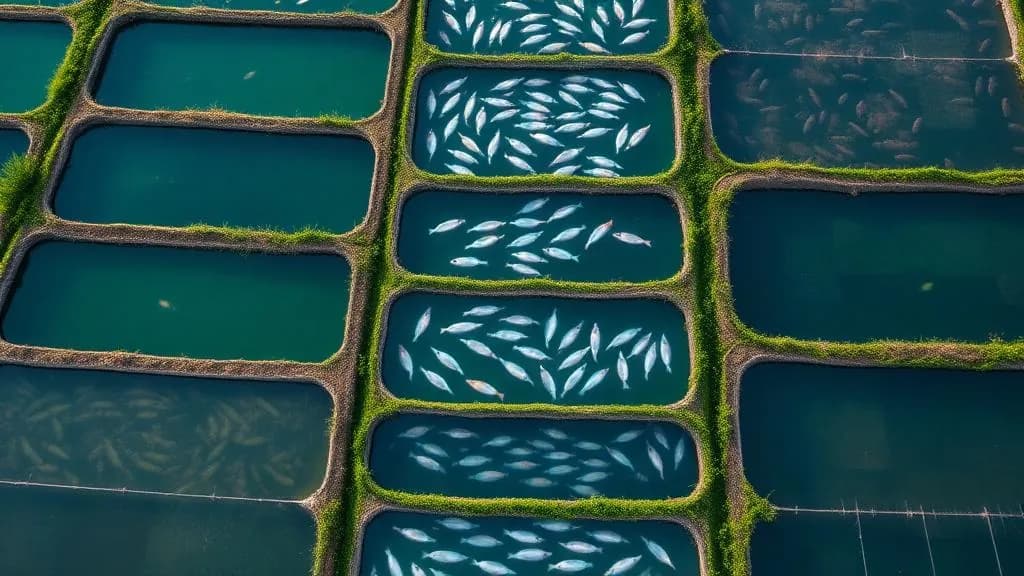
How many fish to put in a pond is one of the biggest decisions a farmer makes each cycle. It is tempting to think more fish must mean more production. In practice, the right density balances production with the pond's ability to keep fish growing well, and getting it right lowers risk as much as it raises output.
The hidden cost of overstocking
Crowded fish compete for feed, so sizes spread out and average growth slows. The water deteriorates faster, oxygen runs short sooner, and more has to be spent on aeration and water management. Stressed fish in crowded ponds are also more likely to fall ill, and a single bad night of low oxygen can cause heavy losses.
Add it up, and stocking more fish can end up producing less fish of the size the market wants, at a higher cost and with more risk. The aim is not the most fish in the pond but the density that gives the best return with a margin of safety.
Finding your density
The right density depends on the species, the culture system, how much aeration and water exchange you have, the size you plan to harvest at and the market you are selling to. A heavily aerated pond with good water exchange can carry far more fish than an unaerated one.
Our species pages give a typical starting band per hectare for each species, and the stocking check in our feed calculator compares your numbers with it. Treat these as starting points, not rules. Your own pond, management and records will tell you where your best density is, so change it gradually from one cycle to the next and watch growth, feed use and fish health.
Density grows as the fish grow
Stocking density is not a one-time decision. The number of fish may stay the same, but the weight of fish in the pond rises steadily through the cycle. A pond that is comfortable with small fingerlings can be crowded once the same fish are near market size.
Plan for this from the start. Base the stocking number on the weight you expect at harvest, not on the size at stocking. Partial harvesting, or grading and splitting into other ponds, can ease the load later in the cycle.
Managing a pond as the load rises
Add aeration before oxygen becomes limiting, not after. Test water more often as the biomass climbs, especially oxygen at dawn. Keep the bottom clean and avoid overfeeding. Be ready to harvest early if conditions start to slip, because selling slightly smaller fish is better than losing them.
Records make the decision easier
Keep a note of stocking numbers and sizes, sample weights, feed used, losses and harvest weights for each pond and each cycle. Over a few seasons these records show which density works best on your farm.
Our feed calculator and season feed plan help you see how much feed a given stocking will need, and the Zoventa team can talk through your plans for the next cycle.